Chapter 1 - The Weight of Water
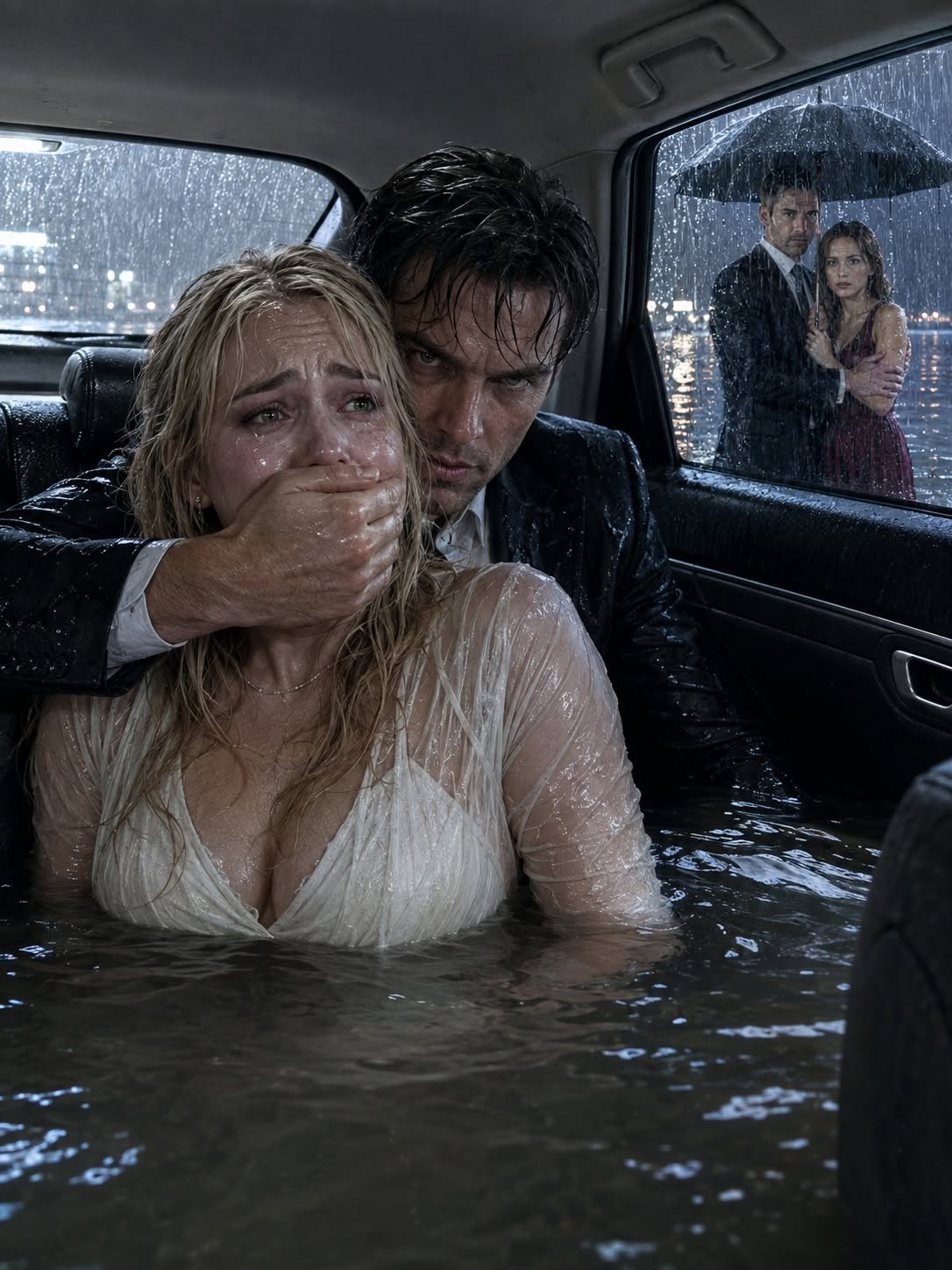
The water did not rush in with a roar; it seeped through the floorboards with a heavy, relentless hiss that smelled of salt, silt, and rotting marsh grass.
I couldn't breathe. My throat felt as though it were stuffed with dry cotton, even as cold droplets sprayed against my cheek from the shattered glass of the driver’s side quarter-window.
"Don't bother trying to open the door, Valerie. It’s too late for you."
Julian’s voice had contained no anger. That was the detail that cut through the terror and embedded itself into my mind like a steel splinter. There was no tremor of panic, no adrenaline-fueled pitch of a man struggling to survive a horrific highway tragedy. His tone had been flat, clinical, and faintly bored—the voice he used when instructing his administrative assistant to cancel an inconvenient afternoon appointment.
I pulled on the chrome door handle until my knuckles turned white. The latch gave a dull, hollow click, but the heavy steel panel didn't budge an inch against the external water pressure.
"Julian!" I screamed, the sound tearing at my larynx. "Julian, the lock is jammed! Help me!"
He didn't turn back. Through the rising, murky green water filling the front footwells, I watched my husband of three years slide smoothly through the open driver’s window. His movements were fluid, deliberate, almost athletic. He didn't claw at the frame. He didn't gasp for air. He simply pushed off the leather headrest, kicked his legs, and floated upward into the dark current of the James River.
The water reached my waist, frigid and thick with river mud.
"Mason!" I shrieked, turning my torso as far as the shoulder harness would allow. "Mason, stay back! Keep your head up!"
In the rear view mirror, framed by the dark leather of the executive seating package, my twenty-seven-year-old brother sat motionless. His pale face was illuminated only by the dying green glow of the dashboard electronics. His useless legs, unmoving for fifteen years, were submerged beneath two feet of black water. His customized carbon-fiber wheelchair—the one our family trust had spent thirty thousand dollars to import from Sweden—was strapped securely into the trunk floor behind him.
"Val..." Mason’s voice was barely a whisper, carrying a strange, raspy resonance that sounded entirely detached from the panic rising in my chest.
"I’m getting you out!" I sobbed, my hands trembling violently as I jammed my thumb against the red RELEASE button on my seatbelt buckle.
Nothing happened.
I pressed harder, using both thumbs, putting the full weight of my shoulder into the motion. The red plastic button was frozen solid.
Panic turned my vision red around the edges. I slid my hand down the woven nylon strap, tracing the belt down to where it anchored into the frame of the chassis near the center console. My fingers brushed against something hard, thin, and metallic wrapped tightly around the latching mechanism.
It wasn't a jam.
A thick, double-looped strand of high-tensile steel aircraft wire had been threaded through the internal spring box of the buckle assembly and wrapped four times around the floor anchor, twisted tight with heavy pliers. Someone had intentionally locked me into the driver's seat.
Someone who knew I always sat in the front. Someone who had offered to check the tire pressure before we left the estate.
Julian.
"No, no, no, God, please, no..." I whimpered, my fingernails tearing as I tried to claw at the twisted wire. The steel bit into the flesh of my fingers, drawing thin lines of blood that vanished instantly into the murky water.
Every sweet memory of our three-year marriage dissolved in a single, sickening instant.
The warm milk he brought to my bed every night at ten o'clock—the milk that always made my eyelids heavy within ten minutes, ensuring I slept through his late-night "conference calls."
The way he had insisted on taking over the financial oversight of the Vance Heritage Shipyard six months after our wedding, claiming he wanted to "lighten the load" after my father's heart attack.
The way he had convinced me to consolidate our personal life insurance policies into a single, comprehensive umbrella policy with a dual-beneficiary clause just ninety days ago.
“If anything ever happens to either of us, Val,” he had whispered into my hair while we lay on the deck of our sailboat last summer, “I want to make sure the shipyard stays in the family. We have to protect the legacy.”
It wasn't a marriage. It had been a long, methodical execution.
The water reached my ribs. It was ice-cold, driving the breath from my lungs in short, shuddering gasps. The nose of the heavy Lincoln Navigator was tilting downward, sliding into the soft silt of the riverbed forty feet below the surface.
I turned my head toward the side window, pressing my face against the laminated glass. Through the dark water and the swirling bubbles, I looked up toward the muddy embankment near the ruined highway guardrail.
The afternoon sky was a pale, stormy gray, but I could clearly see two figures standing on the shoreline under a large, black golf umbrella.
Julian was pulling himself out of the water. He didn't look back at the bubbling surface where our SUV had disappeared. Instead, he walked straight into the arms of the woman holding the umbrella.
She wore a camel-hair coat that fell to her knees, but the front was unbuttoned. Even through the distorted lens of thirty feet of river water, her silhouette was unmistakable.
She was visibly, heavily pregnant.
It was Chloe.
My half-sister. My father’s daughter from his second, disastrous marriage—the sister I had taken into our home four years ago when her mother’s estate went through bankruptcy. The sister I had paid for through three years of business school.
Julian reached out, his hand resting gently over the round swell of her stomach. Chloe leaned up, her face tilting toward his, and kissed him deeply on the mouth. Then, side by side, their arms wrapped tightly around each other's waists, they turned and stood at the water's edge, watching the final air bubbles from our car burst upon the surface.
Julian was smiling.
A terrible, quiet laughter bubbled out of my chest, turning into a sob that swallowed water.
Fifteen years ago, my mother and father had died on a rain-slicked highway three miles from this exact bridge. Mason had survived, his spine shattered, confined to a chair for the rest of his natural life. I had spent fifteen years carrying the guilt of that night, believing that if I had insisted on driving instead of my father, they might still be alive.
I had built my entire life around protecting what was left of our family. I had given up scholarships in Europe to manage the shipyard. I had sacrificed every personal ambition to ensure Mason had the best medical care money could buy.
And now, the man I had brought into our home was standing on the riverbank, holding my sister's hand while the river filled my lungs.
"I'm sorry, Mason," I choked out, my mouth dipping beneath the rising waterline. The water was foul, tasting of gasoline and mud. "I brought him here... I did this to us..."
The water covered my chin, then my nose.
I closed my eyes. Darkness closed in, heavy and mercifully numb.
Then, a sudden, violent sound tore through the silence of the submerged cabin.
CRACK.
It was not the sound of metal yielding to water pressure. It was the sharp, explosive snap of reinforced plastic splitting under intense physical force.
I opened my eyes underwater.
The interior light was flickering out, but in the dim green ambient light filtering down from the river surface, I saw something that caused my dying heart to stop entirely.
Mason was no longer in the back seat.
He was standing upright in the middle of the flooded cabin.
His legs—the legs that four separate orthopedic surgeons in Baltimore and Philadelphia had declared permanently paralyzed fifteen years ago—were planted firmly on the floorboards. His thighs were thick with hard, conditioned muscle beneath his wet corduroy pants. His spine was straight, his posture powerful, devoid of any tremor or weakness.
He reached down into a heavy, waterproof tactical pouch concealed beneath his loose winter parka and pulled out a ten-inch pair of industrial tungsten-carbide wire cutters.
With two quick, precise movements underwater, Mason plunged the cutter into the seatframe, snip-snip.
The steel wire holding my seatbelt snapped with a dull ping.
He grabbed the front of my sweater, hauling my upper body out of the driver's seat with a single, terrifying surge of arm strength, pulling my face above the small pocket of air trapped against the ceiling roofline.
"Gasp!" I sucked in a lungful of stale, oxygen-starved air, coughing wildly. "Mason... your... your legs..."
May you like


Mason leaned down, his eyes dark, furious, and intensely sharp. His face possessed none of the gentle, fragile vulnerability he had worn for fifteen years.
"Keep your mouth shut and hold your breath," he whispered, his voice vibrating against my ear with an authority I had never heard from him in my entire life. "If he sees a body surface, he’s going to use the rifle in his trunk."


