Chapter 3 - THE PENTHOUSE REFUGE
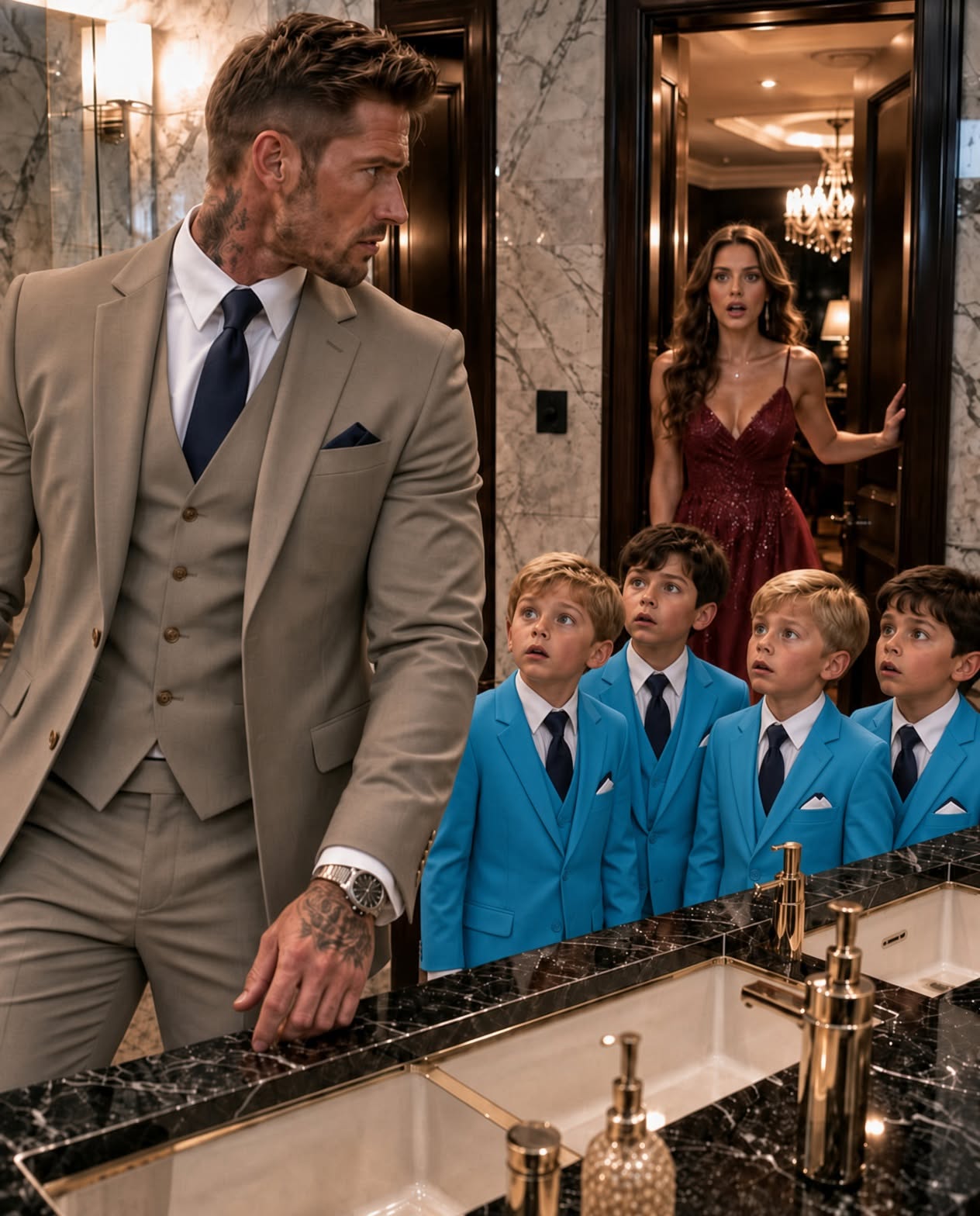
The Tribeca penthouse was a monument to modern isolation.
Spanning the top floor of a converted nineteenth-century textile warehouse on Franklin Street, it featured twelve-foot ceilings, polished concrete floors, exposed brick walls, and floor-to-ceiling glass windows that offered a sweeping, unobstructed view of the Hudson River and the glittering lights of the Holland Tunnel.
When I bought it three years ago, I thought the emptiness was sophisticated. I thought the minimalist furniture, the lack of clutter, and the sound-insulated glass were the ultimate luxuries of a bachelor who valued peace and quiet.
Tonight, standing inside the foyer with the sleet melting off my wool coat, the penthouse didn't feel sophisticated. It felt like a tomb.
The place was entirely dark except for the amber glow of the city lights bleeding through the massive windows. From the direction of the open-plan kitchen came the low, rhythmic murmur of a television playing a cartoon, accompanied by the muffled sound of children’s laughter.
I slipped off my shoes, leaving my damp overcoat on a brass hook by the door, and walked quietly down the long hallway toward the kitchen island.
The scene waiting for me looked like an explosion in a pastel-colored warehouse.
The sleek, minimalist marble island—usually bare except for a chrome fruit bowl and a bottle of sparkling water—was currently covered in open boxes of macaroni and cheese, a half-empty carton of whole milk, four plastic cups shaped like superhero heads, and a scattering of blue and red crayons.
Sitting on the high-end leather barstools were the quadruplets.
They had stripped off their navy blazers and stiff white dress shirts, now wearing oversized cotton t-shirts that looked like nightgowns on their small frames. They were eating spoonfuls of Kraft Macaroni and Cheese from paper bowls while watching a movie projected onto the far brick wall.
And standing by the stainless steel stove, wiping down the counter with a damp sponge, was Mara.
She had taken off her server’s apron. Her dark hair was down now, falling in soft waves around her shoulders, catching the amber light of the city. She wore a simple charcoal sweater that swallowed her hands, the sleeves pulled down over her wrists.
She heard my footsteps on the concrete floor and froze.
Slowly, she turned around. Her green eyes met mine across the kitchen island. There was no defiance in them now—only a deep, bone-weary wariness, like an animal that had escaped a trap but expected the hunter to follow.
“You’re back early,” she said quietly, her voice barely audible over the cartoon music. “Where’s your fiancée? Did you forget to invite her to the penthouse?”
I stopped ten feet away, keeping my distance so as not to crowd her in her own temporary sanctuary.
“There is no fiancée,” I said. “The engagement is canceled. Permanently.”
Mara’s sponge paused on the counter. She stared at me, her brow furrowing in suspicion. “What are you talking about? Billionaires don’t just cancel society weddings because of a traffic jam.”
“I didn't cancel it because of traffic,” I walked closer, resting my hands on the edge of the marble island opposite her. “I canceled it because I found out my mother lied to me six years ago. Because she had you tracked, because she intercepted your medical records while you were in premature labor in Queens, and because she forged a goodbye letter with my name on it.”
The kitchen went dead silent, save for the cartoon characters shouting on the brick wall.
Mara’s breath hitched. She dropped the sponge into the sink with a wet slap.
“She... she told you she forged it?” Mara whispered, her green eyes wide and shimmering with unshed tears that she stubbornly refused to let fall. “After all this time... you finally talked to her?”
“I talked to her tonight,” I said, my voice hard as stone. “And I walked out of her house, her trust, and her company before she could finish her champagne toast. I’m done living the life she scripted for me, Mara.”
One of the boys—Mason, I thought, or perhaps Max—spun around on his barstool, holding out a plastic spoon dripping with cheese sauce.
“Mister Julian? Are you going to live here with us now?”
The question hung in the air like a drop of water about to fall from a ceiling.
I looked down at the boy, seeing the exact same slant of the eyebrow that I saw every morning when I shaved. Then I looked up at Mara, whose chest was rising and falling rapidly under her charcoal sweater.
“That’s up to your mother,” I said softly, my gaze never leaving Mara’s face.
Mara looked away, staring down at the stainless steel sink, biting her lower lip until it lost its color. She crossed her arms tightly over her chest, as if holding herself together against a sudden gust of wind.
“You think you can just walk back in here, Julian? You think a few harsh words to your mother and a set of keys erases six years?” she asked, her voice cracking with a sudden, fierce wave of emotion. “Do you have any idea what it was like? Do you know what it means to be twenty-one years old, terrified, bleeding in a hospital bed in Queens, told that the man who swore he loved you had traded you off for a family inheritance? Do you know what it’s like to raise four babies in a one-room apartment with a broken radiator while working three shifts at a diner just so they could have milk?”
Every word was a physical blow. I didn't flinch. I didn't look away. I took two steps around the island, closing the distance between us until I was standing right in front of her, close enough to smell the faint scent of vanilla and laundry detergent on her sweater.
“No,” I said, my voice rough and broken. “I don’t know what that felt like. Because I was told you didn't want me. I was told you took a half-million-dollar payoff and ran off to California. I spent six years drinking myself to sleep in this exact apartment, wondering what I did wrong, wondering why the only person who ever made me feel human decided I wasn't worth a goodbye.”
Mara stopped breathing. Her green eyes flew up to meet mine, searching my face for any sign of a lie, any trace of the arrogant heir she had known in college.
She found nothing there except the same hollow, starving grief that had haunted her own mirror for years.
“You... you didn't know about the payoff?” she whispered.
“I swear to God on my father’s grave, Mara, I didn't know a single word of it until your son dropped a crayon drawing and a voice recorder into my lap tonight,” I said, my hand rising slowly, trembling just an inch before my fingers brushed the loose strands of hair back from her forehead, tucking them behind her ear.
She didn't pull away. Her cheek pressed instinctively into the warmth of my palm for a fraction of a second before she caught herself, stepping back with a sharp intake of breath.
“The boys are tired,” she said, her voice shaking as she turned away to bus the empty bowls from the island. “It’s past eight. They need to sleep.”
“There are four spare bedrooms down the hall,” I said, watching her movements. “They can each have their own room. Or, if you’d prefer, we can share the master suite—you and the boys. I’ll take the couch.”
Mara stopped with her back to me, holding the four plastic superhero bowls in her hands.
“We aren't staying, Julian,” she said, though the conviction in her voice was wearing dangerously thin. “We’re just here for tonight. Tomorrow morning, we’re going to my sister’s place in Jersey.”
“Your sister’s apartment has one bedroom and a broken boiler,” I said quietly, leaning against the counter. “I had private investigators run a background check on you within twenty minutes of leaving that restaurant kitchen, Mara. I know about the eviction notice on your door in Astoria. I know about the medical bills from Max’s asthma treatments last month. You don't have a car, you don't have a deposit for a new lease, and if you step foot in Jersey tomorrow without a job, you’ll be sleeping in a shelter by Monday.”
She spun around, her face flushed with angry pride.
“You spied on me?”
“I protected you,” I corrected her. “The same way I should have been protecting you six years ago if my mother hadn't locked me out of the delivery room. You can hate me all you want, Mara. You can call me every name in the book. But you and those boys are not leaving this penthouse until I’ve made sure you never have to worry about rent, or heat, or milk again.”
Before she could fire back another angry retort, a small voice interrupted from the end of the hallway.
Milo stood rubbing his eyes, clutching a worn blue blanket in one hand, swaying slightly on his feet with exhaustion.
“Mom?” he mumbled, yawning so wide his jaw popped. “Can Mr. Julian read us a bedtime story? The beds in this room are bigger than our whole apartment.”
May you like


Mara looked from Milo to me, the anger draining out of her posture, leaving behind only an overwhelming, helpless fatigue. She let out a long, shuddering sigh, her shoulders dropping.
“Go on, then,” she whispered to me, her green eyes glistening with unshed tears. “Go read them a story, Julian. Let’s see how long a billionaire can keep up with four six-year-old boys who have too much sugar and not enough sleep.”


