Chapter 2 - THE CONSERVATORY LIES
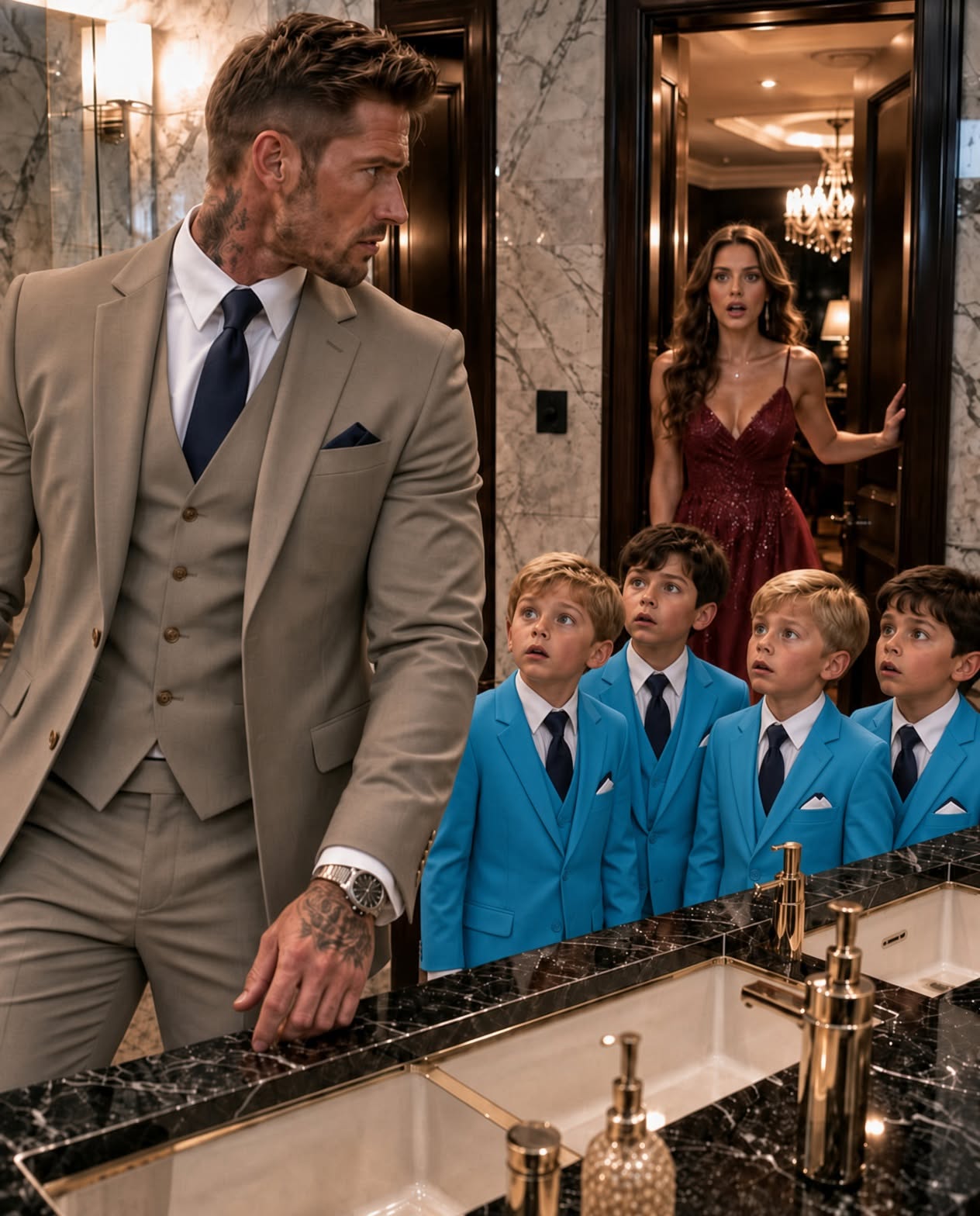
The marble foyer of my mother’s Park Avenue townhouse smelled of imported white lilies, burning bayberry wax, and the distinct, unmistakable aroma of upper-class panic.
It was eight-fifteen when I pushed the heavy mahogany front doors open. The valet out front didn’t even look up as I tossed him my keys; he assumed I was just running late from a board meeting, as I always did. The low murmur of a string quartet playing Vivaldi drifted down the sweeping double staircase, punctuated by the soft clink of crystal flutes and the polite, hollow laughter of people whose net worth exceeded small European nations.
I didn't take off my overcoat. I left it unbuttoned, the damp chill of the February sleet still clinging to the wool shoulders as I marched past the coat-check alcove toward the conservatory.
The glass-enclosed pavilion extended over the rear terrace, offering a panoramic view of Central Park under a shroud of black winter snow. Inside, two hundred of New York’s elite mingled under a canopy of fairy lights and towering floral arrangements. Women in silk evening gowns drifted through the crowd like expensive ghosts; men in bespoke tuxedos stood in tight circles, discussing bond yields and corporate acquisitions with the casual boredom of gods discussing weather.
At the far end of the room, standing beside a towering ice sculpture shaped like intertwined initials, stood my mother, Eleanor Whitaker.
She wore emerald velvet that seemed to swallow the light, her silver hair styled in a immaculate French twist that had not a single strand out of place. Beside her stood Brielle Cartwright, radiant in a champagne-colored backless gown that cost more than a Honda Civic, laughing softly at something my mother had whispered in her ear.
Then Eleanor’s eyes scanned the crowd, landed on me, and her polite hostess smile locked into place. She excused herself from the Cartwrights, gliding across the marble floor with the lethal grace of an apex predator wearing Chanel.
“Julian,” she hissed, her fingers clamping onto my forearm with a grip like a vice disguised as an affectionate motherly touch. “Where have you been? The string quartet has played the Four Seasons twice, and Arthur Cartwright is asking why you aren't standing on the dais with the microphone. Your phone has been going straight to voicemail. What is the meaning of this?”
I looked down at her. For thirty-two years, I had viewed her as the ultimate authority—the woman who had kept the empire together after my father’s sudden death, the iron-willed matriarch who taught me how to read balance sheets before I could tie my shoes.
Now, looking at the fine lines around her eyes, I saw only the architect of a prison built out of forged letters and stolen years.
“I canceled it, Mother,” I said, my voice barely above a whisper, pitched low enough to be lost beneath the Vivaldi.
Eleanor blinked. The emerald velvet of her gown seemed to tighten around her chest.
“What did you say?”
“I canceled the announcement. The engagement is off. The guests can finish their champagne and take their coats on the way out.”
The silence that followed was heavier than the crystal chandelier hanging above our heads. Eleanor’s manicured fingers tightened on my arm until her nails dug through my shirt fabric.
“Are you out of your mind?” she breathed, her voice trembling with suppressed fury, a terrifying contrast to the serene smile she maintained for the benefit of the surrounding guests. “The Cartwright merger has been in negotiations for eight months. The press release is already on the wire for the Times. You do not simply ‘cancel’ an engagement because you’re having a childish fit of cold feet!”
“It’s not cold feet,” I said, stepping back and pulling my arm free from her grip with a slow, deliberate motion. “It’s an allergic reaction to being lied to for six years.”
Eleanor’s face went rigid. The color drained from her cheeks for a fraction of a second before rushing back in a dark, furious flush.
“What are you talking about?”
“Mara,” I said the name softly, watching her eyes.
The effect was instantaneous. It was subtle—just a microscopic tightening of the muscles around her mouth, a slight dilation of her pupils—but to a man who spent his life reading micro-expressions across boardroom tables, it was a neon sign flashing guilty.
“That gutter-born artist,” Eleanor spat, the polite society veneer cracking just enough to let the venom leak through. “So she crawled out from whatever hole she’s been hiding in. I suppose she’s looking for a payout. She realized that raising four bastards on a waitress’s salary is harder than she thought, and now she’s sent the little charity case crying to you with some fabricated sob story.”
My blood turned to ice.
“Four,” I repeated. The word felt heavy in my mouth. “Mother... how did you know there were four?”
Eleanor froze.
The blood vanished from her face entirely this time, leaving her looking remarkably old, remarkably small beneath the towering floral arches of the conservatory.
“I... everyone in that circle knows—” she stammered, her voice losing its absolute authority for the first time in my memory. “You just said... you said she had children... it was obvious—!”
“I didn't say how many children she had,” I whispered, stepping closer until I towered over her. “I said I canceled the engagement because of Mara. I didn't mention quadruplets. I didn't mention four boys who share my face. How did you know there were four, Mother?”
The string quartet swelled into a dramatic crescendo, but inside the conservatory, time had stopped. Around us, oblivious to the earthquake happening between mother and son, Arthur Cartwright raised a champagne flute, laughing heartily at a joke told by a Wall Street broker.
Eleanor swallowed hard. She straightened her spine, attempting to regain the impenetrable armor of the Whitaker matriarch, but her hands were trembling against the velvet of her skirt.
“When a woman disappears for six years and returns with baggage,” Eleanor said, her voice dropping into a harsh, clinical hiss, “any sensible person assumes the worst. I made inquiries. I have people who keep track of our family’s interests, Julian. It is my job to ensure that scavengers don't crawl out of the woodwork to feed on your father’s legacy.”
“You didn’t make inquiries,” I said, my voice shaking with a rage so cold it felt numb. “You had her watched. You knew she had my children in that hospital in Queens six years ago. You knew she went into premature labor while I was away at the London summit, and instead of calling me, you sent your lawyers to buy her silence with a forged letter and a threat.”
“I saved you!” Eleanor hissed, her voice rising just enough to catch the attention of a passing waiter balancing a tray of canapés. She quickly smoothed her expression into a strained, plastic smile, nodding politely to the waiter before turning her fury back on me. “I saved you from a girl who would have dragged our name through the mud! She was nobody, Julian! An art student from a bankrupt family in Brooklyn who couldn't even afford her own rent! If you had stayed with her, you would have spent your life funding her bohemian lifestyle instead of taking your rightful place at the head of the board!”
“They are my sons,” I said, the words cutting through the ambient noise of the party like a butcher’s knife. “My flesh and blood. Four little boys who have my face, living in poverty in this city while you sit in this mausoleum drinking champagne and planning corporate marriages.”
“They are mistakes,” Eleanor snarled, her eyes flashing with a desperate, frantic cruelty. “Unsanctioned, inconvenient little mistakes that would have destroyed your future before it even began. And if you walk out of this room tonight—if you throw away the Cartwright alliance for a waitress and a pack of bastards—you will no more control a single dime of the Whitaker trust. I will disown you before midnight. I will strip you of your title, your shares, and your name.”
I looked down at the woman who had birthed me, realizing with a profound, terrifying clarity that she didn't love me. She loved the institution. She loved the brand. To her, I wasn't a son; I was a holding corporation that needed to be protected from hostile takeovers, even if the hostile takeover was my own blood.
“Keep the trust, Mother,” I said quietly.
I reached into my breast pocket, pulled out the velvet box containing the four-carat diamond ring, and set it down gently on the edge of the ice sculpture, right beside the melting initial B.
“Buy yourself a bigger chandelier. You’re going to need something to keep you warm when you’re sitting in this house all by yourself.”
May you like


“Julian—!” she gasped, reaching out a hand as I turned my back on her. “Julian, don't you dare—!”
I didn't look back. I walked through the murmuring crowd of elites, past the string quartet playing Vivaldi with cheerful indifference, and pushed my way out into the cold New York night.


