Chapter 1 - The Weight of Steel
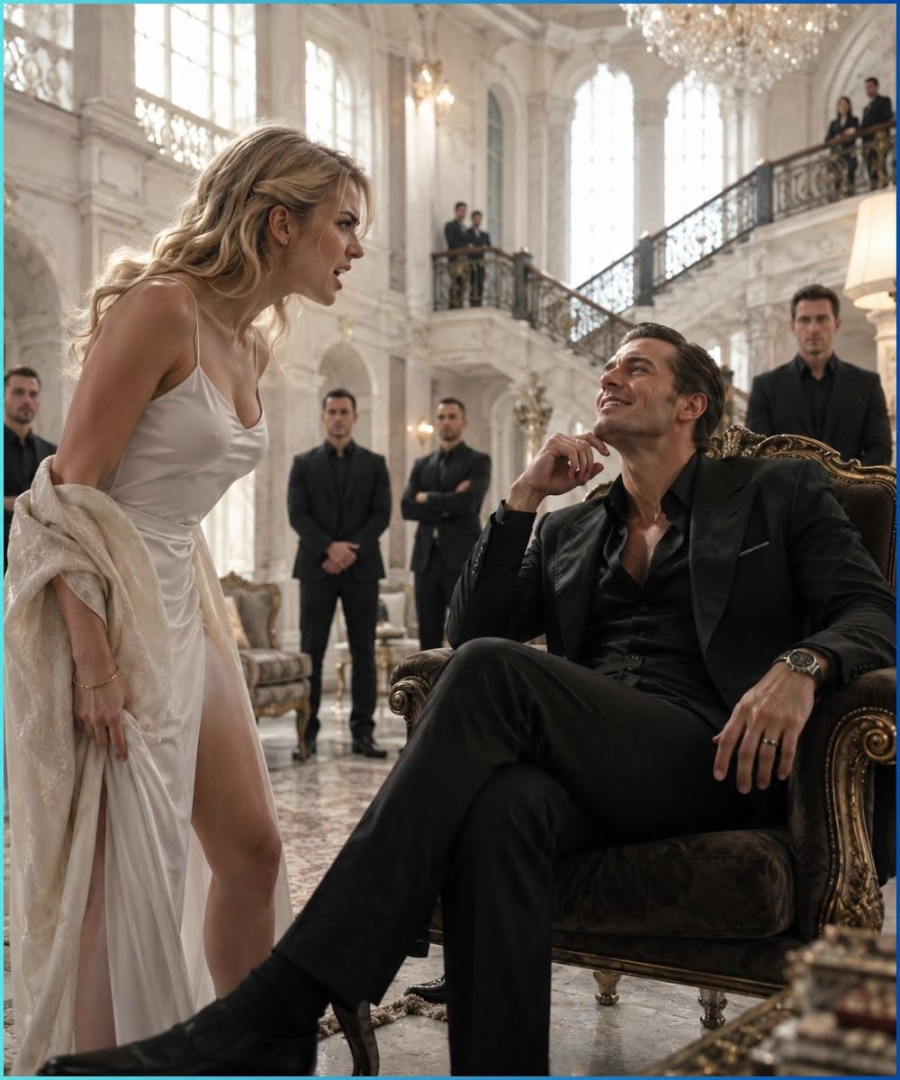
The 2008 Silverado smelled of oil, sulfur, and thirty years of accumulated Baltimore exhaust. Underneath its chassis, the universe was simple: cold steel, rust, and bolts that surrendered only when treated with the proper combination of leverage and cursing.
Frankie Bellini held a sixteen-millimeter socket wrench in her right hand, her shoulder braced against the creeper’s wooden frame. Her dark hair was scraped back into a messy knot at the nape of her neck, secured with a broken zip-tie, and a dark streak of lithium grease stained her left cheekbone.
Above her, the rust was losing.
She applied forty pounds of pressure. The bolt groaned—a sharp, metallic screech that vibrated through her knuckles straight into her jaw—and broke free with a satisfying snap.
"One," she muttered into the dark undercarriage.
She reached for the next fastener, her fingers moving by memory. She had worked on this specific frame before. She knew every hairline fracture in the cross-member, every spot where the factory undercoating had chipped away to expose raw, vulnerable iron. This garage didn't belong to a corporation or a franchise; it belonged to the Bellinis. Her father had laid the blue floor paint himself in 1993, dropping a wrench near the hydraulic lift on his first day and leaving a small, star-shaped chip in the concrete that Frankie still looked at every morning when she unlocked the front door.
A shadow broke the fluorescent light spilling under the truck’s rear bumper.
Heavy, uneven footsteps approached. They didn't have the steady, measured rhythm of her lead mechanic, Sal, or the quick, energetic stride of young Toby, their nineteen-year-old apprentice. These steps dragged.
Frankie didn't move from beneath the truck. "If that's the transmission fluid delivery, tell them the bill is short forty dollars because two of the cases were leaking."
Silence.
The footfall shifted. A wheezing breath hitched in the quiet garage, followed by the wet, unpleasant sound of someone swallowing blood.
Frankie slid out from under the Silverado in one smooth, practiced motion, the creeper’s small wheels rattling against the cracked concrete.
She stood up, wiping her palms on a gray shop rag.
Leo stood three feet away, leaning his lower back against the tire balancer as if his spine had turned to damp rope. His left eye was completely swollen shut, a bulbous, dark-purple plum bulging against his cheekbone. His lip was split down the center, smeared with dried, crusty maroon, and his jacket—a leather jacket Frankie knew he had bought six months ago with money he was supposed to use for the shop’s property taxes—was torn at the shoulder.
Frankie’s heart did a strange, cold flip in her chest. It didn't slam against her ribs; it simply settled lower, like an engine block dropping off a hoist.
She didn't scream. She didn't drop her wrench.
She looked at his bruised face, then down at his trembling hands, and finally back to his good eye, which was bloodshot and swimming with shame.
"How much?" she asked.
Leo flinched. "Frankie—"
"How much, Leo?"
"Three hundred."
Frankie let out a small, slow breath through her nose. The air tasted of rust and burnt rubber. Her shoulders, tight from three hours under the truck, eased down half an inch. Three hundred was bad. It meant no new tools this month. It meant she’d have to call the parts distributor in Pennsylvania and ask for another two-week extension on the brake rotor inventory.
"Three hundred dollars?" she said.
Leo swallowed, his throat making a loud, dry click. "Thousand."
The world seemed to pause for a second.
The socket wrench didn't slip because she was careless; it slipped because her hand simply ceased to process the concept of gripping object weight. The heavy steel tool fell six inches and hit the concrete floor with a single, ringing clang that echoed up into the corrugated tin roof.
A pigeon nested in the rafters stirred, cooing once before settling back down.
Frankie didn't look down at the wrench. She kept her eyes fixed on her brother’s face.
"Tell me," she said, her voice dropping into a register so quiet and flat it sounded like someone reading serial numbers off an invoice, "that I misunderstood you."
Leo didn't look at her. He couldn't. His gaze dropped to her steel-toed boots, to the greasy rag in her hand, to the spot where their father’s chipped paint marked the floor.
"I owe three hundred thousand," he said to the concrete. "It... it got out of hand, Frankie. The lines shifted in the fourth quarter. I had the spread, I swear to God I had the spread, but the defense fell apart on the final drive—"
"To who?" she interrupted.
"Frankie, listen—"
"Leo. To who?"
Leo’s split lip trembled. He wiped a smear of clear fluid from his nose with the back of his hand. "Gabriel Costa."
The temperature in the bay seemed to drop five degrees.
The waterfront wasn't vast, but it had dark corners. Everyone who worked between the harbor and the rail yards knew the name Costa. You saw it on the blue-and-silver haulers cruising down Route 40; you saw it printed in crisp, white serif font on the massive shipping containers stacked three high along the dockyards. Gabriel Costa was the city's golden boy of logistics—the man who bought decayed piers, turned them into modern distribution centers, and shook hands with the mayor on television while wearing suits that cost more than Frankie’s service truck.
He was also the man whose name was whispered when an independent operator’s warehouse caught fire two days before a port authority inspection, or when a union representative decided to retire early to Florida after a midnight visit to his kitchen.
"How?" she whispered.
"There was a game," Leo said, his voice cracking. "In the back room behind the dry dock on Pratt Street. It wasn't... it wasn't the usual guys, Frankie. It was high-level. I thought I could make enough to clear the mortgage on the house. I thought if I brought ten grand to the table, I could turn it into forty—"
"You don't have ten grand," she said cold.
"I took it from the payroll account."
Frankie’s right hand twitched. For one brief, terrifying second, she considered picking up the sixteen-millimeter socket wrench and driving it into her brother’s ribs. The payroll account was what paid Sal, who had three grand-kids in parochial school. It was what paid Toby, who slept on his mother’s couch and rode a rusted ten-speed six miles to work every morning.
"You took Sal's money?"
"I was going to put it back!" Leo cried, his hands coming up in a pathetic, defensive gesture that only highlighted how small his frame was compared to their father’s. "I had a system, Frankie! The math worked! The math worked until the third card—"
"Men who have systems don't come home looking like ground beef," she spat. Her chest was tight, her lungs burning as if she’d inhaled cleaning solvent. "Where is the money coming from, Leo? We don't have three hundred thousand dollars. If we sold every lift, every tool, and both service trucks, we wouldn't clear eighty."
Leo swallowed again. His good eye looked up, meeting hers for a fraction of a second before darting away toward the side alley.
"They don't want the lifts," he whispered.
A cold prickle started at the base of Frankie’s neck. "What do they want?"
"The property."
The silence returned, heavier this time.
"The land," Leo continued hurriedly, the words tumbling out of his bruised mouth like vomit. "Costa's people... they're expanding the rail spur from the harbor. They've been buying up the old lots along the fence line for six months. They tried to buy the tire warehouse last month, but the estate is in probate. This lot... our lot... it connects directly to the south siding. If they get this parcel, they don't have to go around the city utility easement."
Frankie stared at him. "They want Dad's shop."
"If we sign over the deed," Leo said, stepping closer, his hands outstretched in a desperate, pleading gesture, "the debt disappears. All of it. The three hundred grand, the interest, the... the things they said they'd do to my legs if I didn't have an answer by five o'clock. Frankie, please. It's just a building. It's just brick and rusty iron."
"No."
"Frankie, they will kill me!"
"No," she said again, her voice like granite.
"It's half mine!" Leo screamed, his voice breaking into a ragged, pathetic sob that sounded tiny in the vast, empty bay. "Dad left it to both of us!"
"Forty percent," Frankie corrected, stepping toward him until she was inches from his chest, forcing him to look down into her face. "Dad left forty percent to you and sixty percent to me because he spent twenty-six years watching you trade your shoes for firecrackers. He knew what you were. He knew if he gave you half, you'd sell it to the first parasite who offered you a shiny ring and a cold beer."
"I am your brother!"
"And this shop is Dad's life!" she shouted back, her voice echoing off the tin ceiling so hard the pigeons took flight. "He bled into this floor! He spent eighteen hours a day in this heat so you could go to that private high school you dropped out of! He died six feet from where you're standing, Leo! With grease under his fingernails and a torque wrench in his hand!"
"He's dead, Frankie!" Leo yelled, tears finally carving pale, clean tracks through the dirt and dried blood on his cheeks. "Dad is dead! And I am going to be dead in three hours if you don't sign that paper!"
Frankie closed her eyes.
In the darkness behind her eyelids, she saw her father—Tony Bellini—standing by the counter on a freezing January morning, his hands cracked and blackened by fifty years of oil, pouring coffee from a dented thermos into two red plastic cups. “Frankie-girl,” he had told her when she was twelve, holding up a rusted brake caliper like it was a gold coin, “the world is full of men who own nothing but their talk. They buy things with paper, they sell things with paper, and when the wind blows, they blow away with it. You hold onto the iron. If you have the iron, you have a place to stand.”
She opened her eyes.
Leo was trembling, his lower jaw shaking so violently his teeth clicked together. He looked young, small, and utterly broken.
She hated him. She hated him so much her teeth ached from clenching her jaw.
She also remembered him at seventeen, sitting on the cold linoleum floor of the emergency room waiting room, holding a bag of stale gummy bears out to her with a stupid, crooked smile while her left arm was locked in a white plaster cast. “Don't worry, Frank. I told the nurse if she doesn't give you the good bandages, I'll put sugar in her gas tank.”
"Where is he?" she asked.
Leo blinked. "Who?"
"Costa," she said, bending down to pick up her sixteen-millimeter wrench. She wiped the tool on her rag and laid it precisely in the third drawer of her red rolling toolbox. "Where is he right now?"
"Frankie, you can't go there," Leo stammered, his hand reaching out to grab her sleeve. "He doesn't talk to people like us. He has men—guys with ears like cauliflowers and coats that don't button right. They don't care that you're a girl, Frankie. They don't care about Dad."
May you like


Frankie pulled her arm out of his grip with a sharp, dismissive jerk.
"Give me the address," she said.


