Chapter 1 - THE RECEPTION DECREE
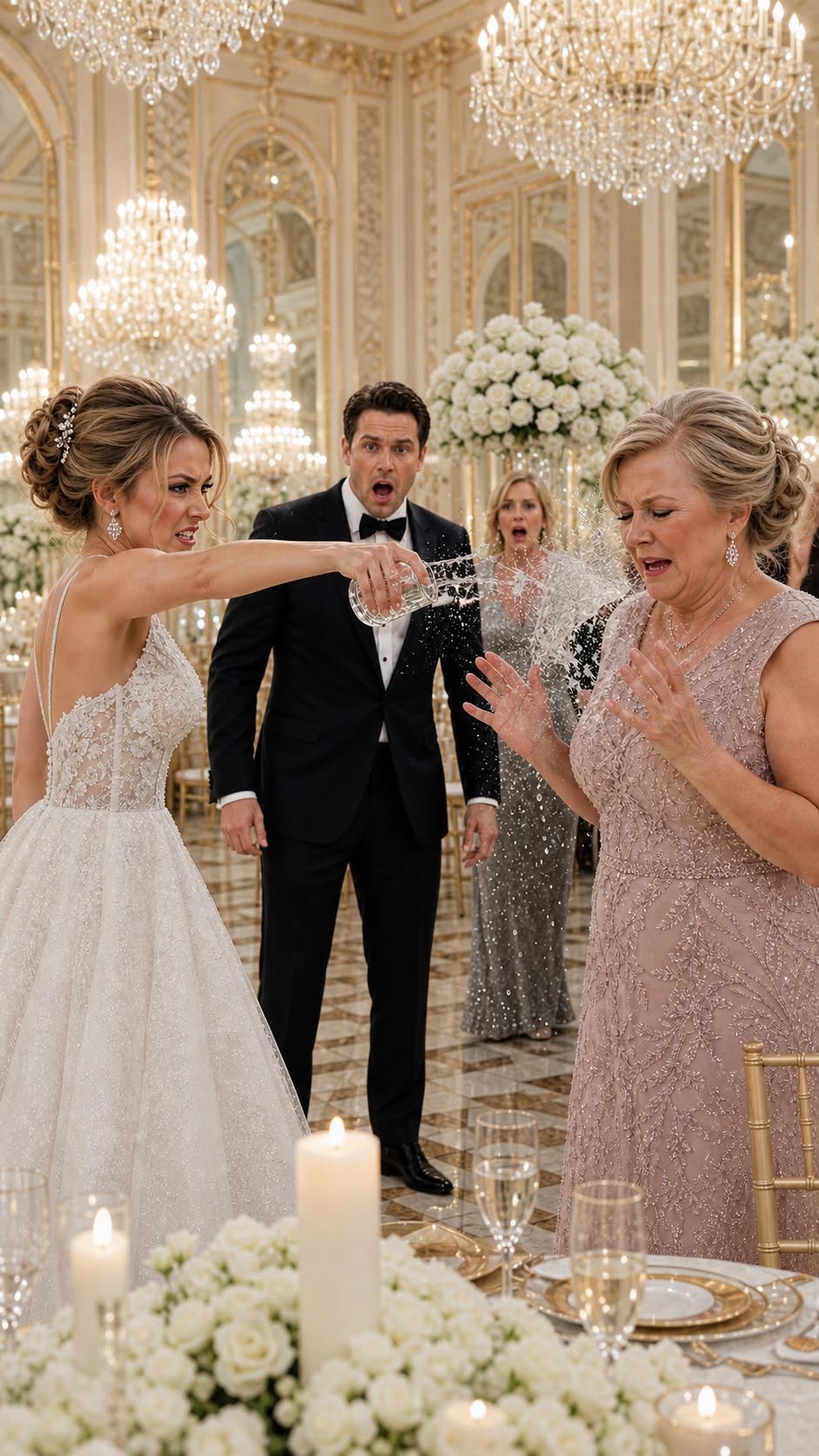
The first thing my mother-in-law asked me to surrender at my wedding reception was my paycheck.
Not part of it. Not a contribution toward household expenses. All of it. My salary, bonuses, investment income, and anything else I earned was supposed to be deposited into an account she would supervise.
At first, I thought I had misunderstood her. The ballroom was noisy. A jazz trio was playing near the dance floor. Servers were carrying plates between tables, and two hundred guests were talking at once beneath chandeliers that made everything look warmer and prettier than it really was.
I leaned closer. “Could you repeat that?”
My mother-in-law, Lorraine Whitaker, placed both hands neatly over her evening bag. She was wearing a dark green gown with a jeweled collar she had spent three months choosing.
“I said that beginning tomorrow, your income should go into the family account.”
I waited. She did not smile.
My husband, Elliot, stood several feet behind her with a glass of champagne in his hand. Technically, he was not yet my husband. That detail would become very important before the night ended. We had held the ceremony that afternoon at the hotel. We exchanged vows. We exchanged rings. The officiant had spoken about commitment, partnership, patience, and building a life together. But because of a scheduling problem involving our attorney and the county office, the official civil documents were not being signed until Tuesday morning.
At that moment, however, none of our guests knew or cared about the distinction. Everyone considered us married. So did I. Until Lorraine began explaining what marriage apparently meant in her family.
She glanced toward the other women sitting at her table—her sister Evelyn, her sister-in-law Clara, and Elliot’s cousin Julianne. All three sat quietly, their posture stiff, their expressions carefully neutral.
“In the Whitaker family, the women hand over their finances to the central trust,” Lorraine explained, her voice dropping into a low, instructive cadence. “It has kept this family secure for three generations. It prevents reckless personal spending and ensures our resources are concentrated for the collective good.”
I looked past Lorraine’s polished collar to catch Elliot’s eye. He was thirty-two years old, a senior risk manager at a commercial bank, and a man who usually prided himself on analytical thinking. But right now, his eyes darted away, fixing intently on the bubbles rising in his glass.
He knew. He had known before we walked down the aisle.
“Elliot,” I called out gently over the music.
He stepped forward, though his gait lacked its usual confidence. “Mom is just explaining how we manage things, Maya. It’s... it’s how my grandfather set up the estate. My mother manages the family pool. My father’s income went there. Evelyn’s income went there. It’s just how we keep everything consolidated.”
I looked between the two of them. I was twenty-nine years old. I was a principal software architect at a mid-sized medical tech firm in Chicago. I had spent seven years building a career, paying off my student loans, and managing my own investment portfolio. I earned two hundred and twenty thousand dollars a year, excluding my annual equity grants.
“And who controls this central account?” I asked.
“I do,” Lorraine said simply. “As the matriarch of the primary estate line, I review all quarterly distribution requests. If you require funds for personal maintenance, clothing, or household items, you submit a schedule to me at the beginning of each month. Approved allowances are disbursed on the first.”
A cold stillness began to spread through my chest, cutting right through the warm buzz of champagne.
“An allowance,” I repeated.
“A managed stipend,” Lorraine corrected smoothly. “It builds discipline, Maya. When young women come into an established family like ours, they often have erratic spending habits. This protects everyone.”
I glanced back at her table. Aunt Evelyn was staring down at her napkin, her fingers twitching slightly. Julianne looked away entirely. It wasn't a family tradition; it was a system of financial domestic servitude engineered to keep every married-in spouse entirely dependent on Lorraine’s permission.
“Elliot never mentioned this during our eighteen months of engagement,” I said, keeping my voice impeccably quiet.
“Because it’s standard procedure,” Lorraine replied. “It didn't need to be discussed until the formal union took place. We don't discuss private family accounting with outsiders.”
Outsiders.
I looked at Elliot again. “Did you know about this?”
He shifted his weight from one foot to the other. “Maya, it’s not as bad as it sounds. My mom handles all the major bills. The mortgage on the Lake Forest house, the maintenance fees, the family vacations—it all comes out of the main trust. You won't have to worry about paying for anything.”
“I don't worry about paying for things now,” I said softly. “I pay my own bills. I own my condo in Lincoln Park outright. I pay my own insurance.”
“The Lincoln Park condo will need to be listed by next month,” Lorraine added casually, as if mentioning a minor change in the weather. “The equity will be rolled into the Whitaker Family Capital Fund. We don't allow separate real estate holdings among family members. It creates tax complications.”
My hands were completely still. My mind, trained over years of complex system design, began running through the data points with cold, terrifying clarity.
They hadn't just expected me to join their family. They had expected me to liquidate my life, transfer my wealth, surrender my autonomy, and hand the keys of my existence to a woman who viewed me as a line-item asset on her balance sheet.
And Elliot had stood beside me at the altar three hours ago, promising to honor and cherish me, knowing full well that tonight’s trap had been laid months in advance.
“Excuse me for a moment,” I said, stepping backward out of their circle.
May you like


“Maya,” Lorraine called out, her tone sharpening just enough to carry over the jazz music. “We need your initial signature on the ledger before the cake cutting. The accountant is waiting in the private suite upstairs.”
I turned, held her cold, dark eyes with mine, and smiled softly. “I’ll be right back.”


