Chapter 8 - THE TRIAL OF RICHARD HALDEN
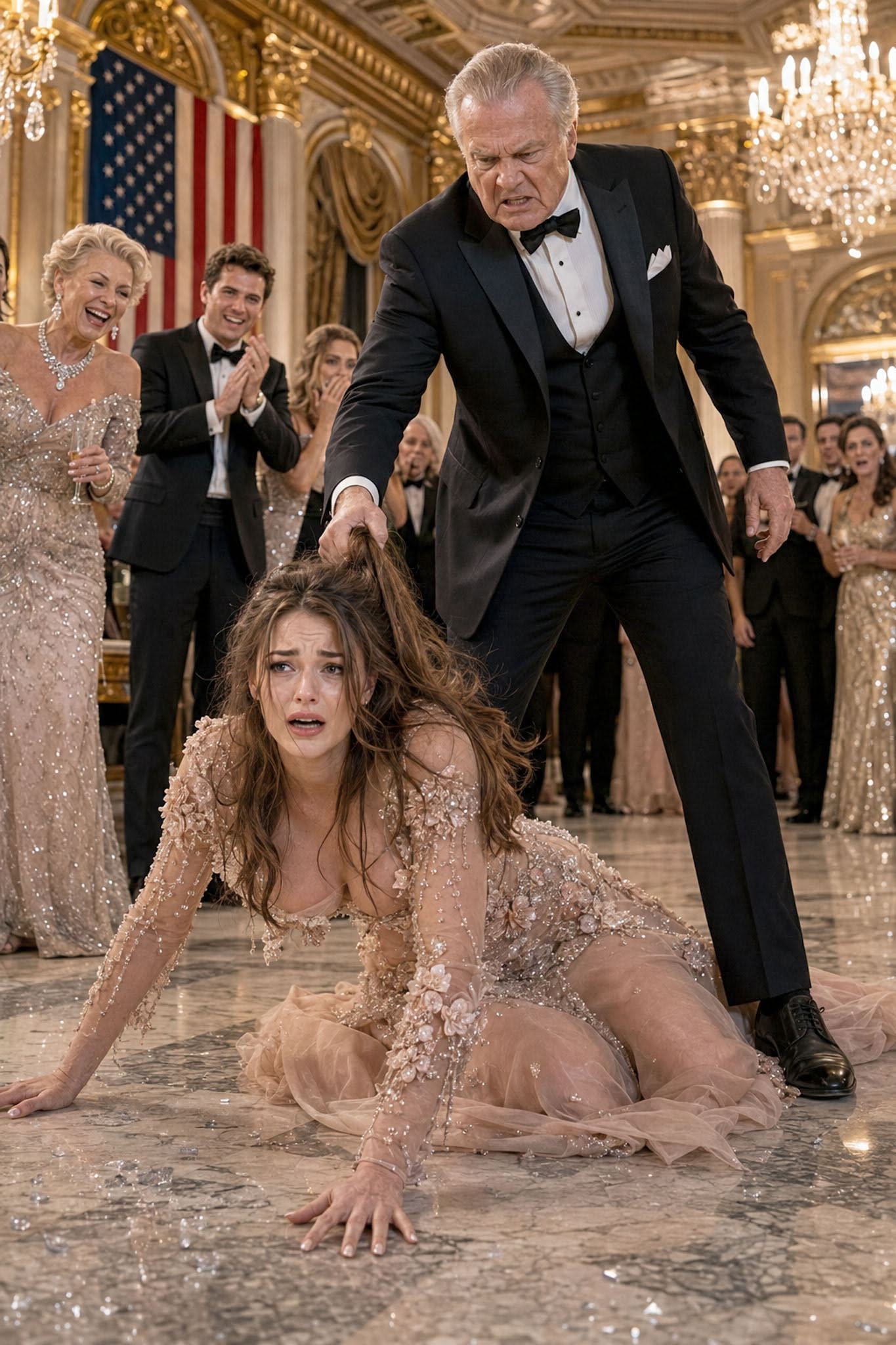
Six months later.
The George L. Allen Sr. Courts Building in downtown Dallas was packed with reporters, television camera crews, and high-society onlookers.
The trial of State of Texas v. Richard Vance Halden had become the biggest scandal in North Texas.
My jaw brace had been removed two weeks earlier. A faint, thin silver scar remained along my left jawline near my ear, and my cheekbone still ached slightly when the weather turned cold, but I stood tall, healthy, and composed in the witness box.
I wore a dark navy tailored suit, my hair pulled back into a neat braid.
Sitting at the prosecution table was the Assistant District Attorney, Sarah Jenkins, alongside Maya Prescott.
Sitting at the defense table was Richard Halden, wearing a plain grey suit, flanked by two high-priced criminal defense attorneys. Beside him sat my mother, Diane, wearing a simple black dress, devoid of her Mikimoto pearls—which had been seized by the court auditor three months prior.
Nathan was not sitting at the family table.
He was seated three rows back in the gallery, wearing civilian clothes. Two months earlier, he had accepted an administrative discharge under less than honorable conditions from the United States Air Force, forfeiting his commission, his security clearance, and his Pentagon assignment to avoid federal court-martial charges.
“Miss Halden,” ADA Jenkins asked, standing before the jury box. “Can you describe for the court what happened at approximately 9:15 p.m. on the night of August 14th in the ballroom of the Grand Monarch Hotel?”
I looked at the twelve jurors—eight women and four men.
I spoke clearly, my voice resonating through the high-ceilinged courtroom.
“My father asked me what money he had ever given me. When I asked him to explain what he meant about my grandmother’s estate, he struck me across the face with a closed fist.”
“Did he say anything to you after he knocked you to the floor?” Jenkins asked.
“Yes,” I answered, staring directly at my father. “He said, 'You do not question me in public. You are nothing in this family. You exist because I allow you to exist.'”
A quiet murmur ran through the gallery.
Jenkins pulled up an exhibit on the large courtroom display screens.
It was Exhibit A: The high-resolution forensic photographs taken at Parkland ER, showing my fractured cheekbone, split lip, and heavy purple bruising, alongside the CT scan renders.
Several jurors gasped softly when the image of my swollen face appeared on the sixty-inch screens.
My father’s defense attorney, a senior criminal lawyer named Marcus Vance, stood up for cross-examination.
He smoothed his expensive tie, offering me a sympathetic, patronizing smile.
“Miss Halden,” Vance began smoothly. “You admit that you were consuming alcohol at the event that evening, correct?”
“I had half a glass of champagne during dinner over a two-hour period,” I replied calmly.
“And isn't it true that you approached your father in a state of high emotional agitation, confronting him loudly in front of senior military officials and corporate executives?”
“I asked him to explain a statement he made into a live microphone about my character,” I corrected firmly.
“Miss Halden,” Vance stepped closer to the witness stand, leaning on the wooden rail. “Isn't it true that your father merely raised his arm to usher you out of the ballroom, and you accidentally tripped over a table decoration, striking your face against a chair?”
A soft laugh escaped my lips before I could stop it.
I leaned forward, looking Vance straight in the eye.
“Mr. Vance,” I said, my voice echoing through the silent courtroom. “Dr. Aris, the chief trauma surgeon at Parkland Hospital, testified yesterday under oath that it required over eighty pounds of direct kinetic pressure per square inch to depress my zygomatic arch three millimeters inward. Unless that wooden chair jumped off the floor and punched me like a heavyweight boxer, your client hit me with everything he had.”
Two jurors nodded in sharp agreement. Marcus Vance’s mouth snapped shut. He looked back at my father, whose face was pale and slick with cold sweat.
“No further questions, Your Honor,” Vance muttered, taking his seat.
The jury deliberated for precisely two hours and fourteen minutes.
When they filed back into the courtroom, the foreman—a retired schoolteacher from Garland—handed the verdict sheet to the bailiff.
Judge Thomas put on his reading glasses.
“On Count One: Aggravated Assault Causing Serious Bodily Injury, a second-degree felony... how do you find the defendant?”
The foreman stood up. “Guilty, Your Honor.”
My mother let out a sharp, choked gasp, burying her face in her hands.
My father sat frozen, staring at the polished oak judge’s bench as if he couldn't comprehend that twelve ordinary citizens had dared to hold him accountable.
“On Count Two: Fraudulent Conversion and Falsification of Trust Documents... how do you find the defendant?”
“Guilty, Your Honor.”
Judge Thomas lowered the papers, looking down at Richard Halden over his spectacles.
“Mr. Halden,” Judge Thomas said, his voice cold and uncompromising. “You were a man of wealth, position, and power in this community. But beneath that polished suit, you acted like a crude, abusive tyrant who stole from his own daughter and thought his money elevated him above the law of the State of Texas.”
Judge Thomas slammed his gavel down.
“I sentence you to eight years in the Texas Department of Criminal Justice, with eligibility for parole after four years. Furthermore, under Delaware civil judgment enforcement, a full restitution order of $9.8 million is hereby levied against your remaining corporate and personal assets.”
The heavy metallic click of handcuffs echoed through the courtroom as two bailiffs stepped up behind Richard Halden, forcing his arms behind his back.
My father turned his head as he was led toward the side door leading to the holding cells.
He looked at me one last time.
There was no anger left in his eyes. No arrogance. No grand authority.
May you like


Only the hollow, terrifying emptiness of a man who had lost everything because he believed his own lies.
I didn't look away. I watched until the heavy metal door clicked shut behind him.


