Chapter 1 - The Weight of Silence
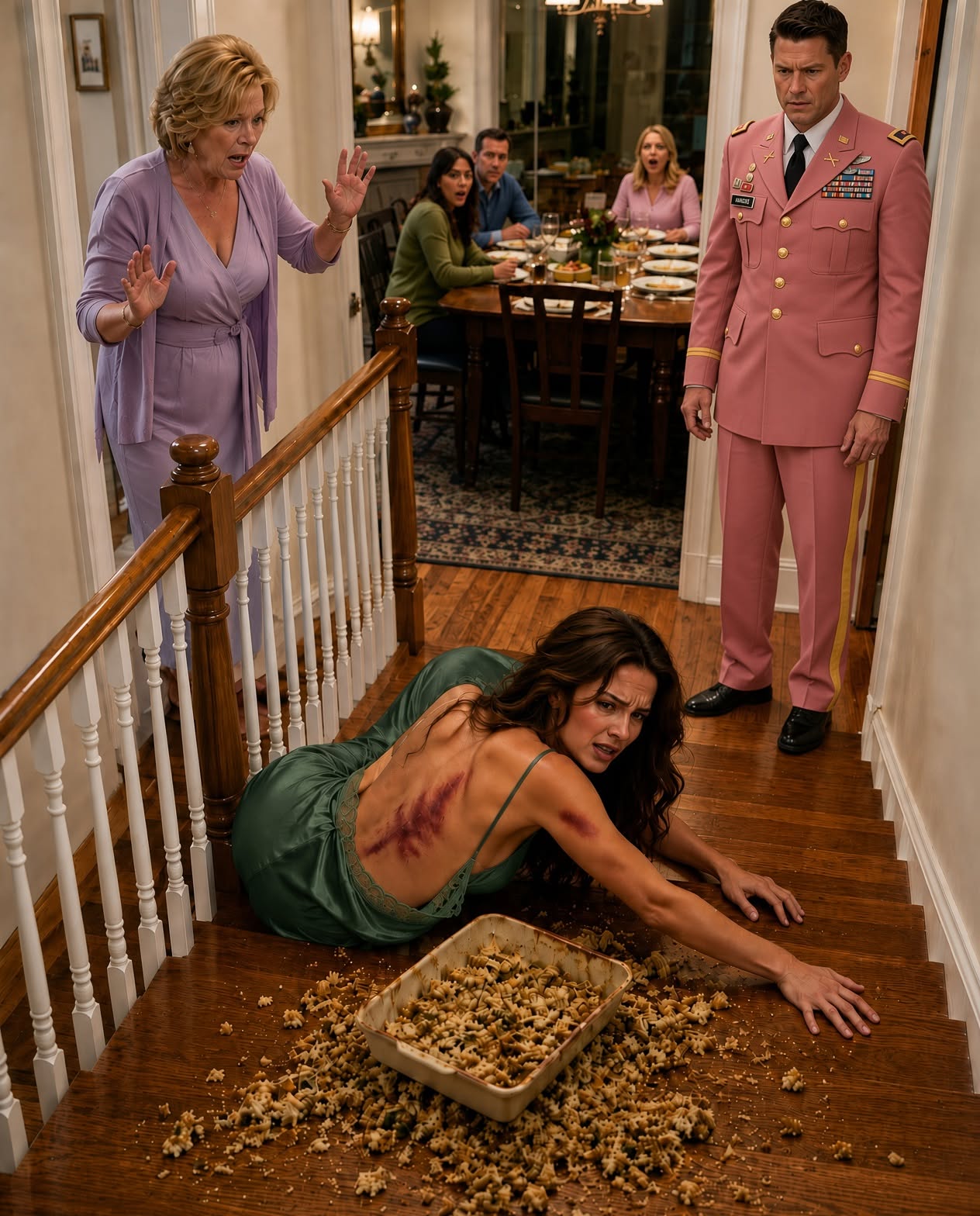
The white light of the examination room felt like a physical weight pressing down on my eyelids.
Every breath I drew pulled a sharp, jagged spike of agony straight through my left rib cage, radiating downward into my lower back and hip. I lay on the thin, crinkly paper covering the hospital gurney, gripping the aluminum side rail so tightly that my knuckles turned the color of chalk.
Beside me, Graham did not sit down. He couldn't. His body was stiff with a nervous, electric tension, his eyes darting toward the heavy mahogany door of the exam room every time a shadow passed by in the corridor outside. He was pacing a tight three-step circuit between the sink and the foot of my bed, his thumbs flying across the glass screen of his phone.
"She's beside herself, Nora," he murmured, his voice hushed, breathless, and soaked in an artificial urgency. "Mom is crying so hard she can barely catch her breath. Uncle Ray had to give her a glass of water. If the police get involved... do you have any idea what that will do to her heart? She's sixty-eight years old."
I didn't turn my head. Just moving my neck sent a dull, nauseating throb through the base of my skull where it had cracked against the concrete floor.
"She pushed me, Graham," I rasped out. My voice sounded thin, hollow, like dry leaves scraping across pavement. "She stood on the top step, looked me dead in the eye, and put her hand between my shoulder blades."
Graham flinched, stopping his pacing mid-step. He pocketed his phone and leaned over the bed rail, lowering his face until he was inches from mine. His breath smelled faintly of the garlic roast and red wine from the dinner table—the dinner I had spent four hours helping his mother prepare before she decided to break my body.
"It was an emotional moment, Nora," he pleaded, his voice dropping into that smooth, persuasive tone he used whenever he was trying to settle a contract dispute at his firm. "You two were arguing about the holidays. You know how sensitive she gets about Christmas rotations. She went to put her hand on your back to turn you around—to talk to you—and you lost your footing. That's what happened. That's the narrative. If you go around telling emergency room doctors that my mother assaulted you, you are going to destroy this family."
"Destroy this family?" A bitter tear slipped out of the corner of my right eye, burning as it tracked across my temple. "Look at me, Graham. I'm the one on a gurney. I'm the one who can't move my leg. She didn't try to talk to me. She shoved me."
"You're in pain, you're confused, and you're angry," he said quickly, reaching out to pat my trembling hand, though his fingers lacked any warmth. "I get it. But we don't air our dirty laundry to strangers. We handle this inside the house. When the doctor comes back, you just tell him you tripped over the hem of your trousers. Please, Nora. For me. For our marriage."
I looked at my husband of three years. Really looked at him.
I looked at his neatly combed brown hair, his crisp oxford shirt—still pristine despite the emergency—and the total absence of fear for my life in his eyes. He wasn't terrified that his wife might have an internal hemorrhage or a broken spine. He was terrified of the social fallout. He was terrified of the local police cruisers pulling into the driveway of the Miller estate in the wealthy suburb of Oak Ridge. He was terrified of his mother's displeasure.
Before I could answer, the door handle turned with a sharp, metallic click.
Dr. Evan Mercer walked back into the room.
The middle-aged emergency physician didn't look at Graham. He carried a grey digital tablet tucked beneath his arm and a thick physical file folder in his right hand. The calm, routine professionalism he had displayed fifteen minutes ago had vanished entirely. His posture was rigid, his jaw set in a hard, unyielding line, and his dark eyes burned with a cold, focused gravity.
"Mr. Miller," Dr. Mercer said, his voice dropping into the small room like a block of ice. "I need you to step out into the hallway and take a seat in the waiting area."
Graham blinked, caught off guard. He immediately tried to assume his natural posture of corporate authority, straightening his spine and stepping closer to the bed.
"Doctor, I'm her husband," Graham said, offering a tight, practiced smile. "I'm her healthcare proxy. Whatever you have to share about Nora's condition, you can say right here in front of me. We don't have secrets in our marriage."
"I am not asking for your permission, Mr. Miller," Dr. Mercer replied. His tone wasn't loud, but it possessed a razor-sharp authority that cut straight through Graham’s polished exterior. "I am instructing you as the attending physician to step out of this room immediately. Security is standing right outside that door. If you compel me to ask them to assist you, it will become very uncomfortable for you very quickly."
Graham’s face drained of color. He looked from Dr. Mercer to the small rectangular window in the door, where the silhouettes of two broad-shouldered hospital security guards were clearly visible.
"Nora..." Graham turned to me, his voice pitching higher, desperate. "Tell him it's fine. Tell him I'm staying."
I stared up at the acoustical tiles on the ceiling. I felt the cold metal of the bed rail against my knuckles.
"Please leave, Graham," I whispered.
He swallowed hard, his jaw twitching violently. He shot Dr. Mercer a look of pure venom, adjusted his cuffs with trembling fingers, and walked out. The heavy door clicked shut behind him, cutting off the low hum of the hallway.
Dr. Mercer waited until the footsteps faded. He drew a round metal stool up to the side of the bed, sat down, and placed the physical file folder on the mobile tray beside me.
"Mrs. Miller," he began, his voice softening, though the intense gravity in his eyes remained. "We took a full radiological series—chest X-rays, abdominal CT scans, and a complete spinal survey. Your acute injuries from tonight are significant. You have three fractured ribs on your left side, a deep pulmonary contusion, and a hairline fracture in your pelvis. You are going to be in considerable pain, but with rest and medical management, those injuries will heal."
I let out a shaky, desperate breath. "Thank God..."
"However," Dr. Mercer interrupted, his hand resting firmly on the edge of the file folder. He didn't open it immediately. He looked straight into my eyes, his expression solemn. "When we run a full-body CT scan following a high-impact trauma, the imaging software doesn't just look at the fresh fractures. It reads the entire skeletal structure. It maps tissue density, old bone remodeling, and historical trauma."
My heart gave a sudden, hard thud against my broken ribs. "What do you mean?"
Dr. Mercer opened the folder. He pulled out a black-and-white printout of a 3D skeletal reconstruction and placed it in front of me.
"Mrs. Miller," Dr. Mercer said quietly, pointing a silver pen at various highlighted nodes along my spinal column and rib cage. "The X-rays showed your fresh injuries from tonight. But the CT scan revealed something else entirely. Something that has nothing to do with falling down a staircase three hours ago."
He paused, looking at me with a mixture of profound pity and deep, professional concern.
"Your skeletal scan shows evidence of multiple old, healed fractures," Dr. Mercer continued. "You have silver surgical pins in your left collarbone that were placed over a decade ago. You have dense bone callus formations along your right ulna, four healed rib fractures on your right side that healed improperly, and micro-fractures along your lumbar vertebrae consistent with severe, repeated blunt-force trauma."
I stared at the black-and-white image, my mind spinning into a dizzying vortex of confusion.
"Doctor... that's impossible," I stammered, my breath catching in my throat. "I've never broken a bone in my life before tonight. I've never had surgery. I've never had surgical pins in my collarbone!"
Dr. Mercer didn't look surprised by my reaction. He simply leaned closer, resting his forearms on his knees.
"Mrs. Miller," he said softly, "radiology doesn't lie. Metal hardware doesn't magically appear on a CT scan. Those pins are real, high-grade surgical titanium. And according to the bone density mapping, those injuries occurred between ten and twelve years ago."
I shook my head violently, the pain in my neck forgotten. "No! No, you have the wrong chart! You must have mixed up my scans with another patient! I grew up in a quiet town in Ohio! I was an athlete in high school! I never had a traumatic accident! I would remember having surgical pins put into my body!"
Dr. Mercer reached out, gently placing his hand over my trembling fingers.
"I verified the patient ID three times before I walked into this room, Nora," he said quietly. "The scan belongs to you. And given the nature of these historical injuries, combined with what you told me about how you arrived here tonight... I have already notified the hospital’s risk management team, social services, and the local police department."
The room seemed to tilt beneath me. The steady beep-beep-beep of the heart monitor accelerated into a frantic, high-pitched rhythm.
Surgical pins. Healed fractures. A history of blunt-force trauma I had no memory of enduring.
And outside that door stood the man I had married—the man who was currently texting his mother to ensure their story stayed straight.
"Doctor..." I gasped, tears finally spilling over my cheeks in an uncontrollable flood. "What happened to me?"
May you like


Dr. Evan Mercer looked at me with an icy, unyielding resolve.
"That, Mrs. Miller," he said, "is exactly what we are about to find out."


