Part 4: The Investigation That Shook St. Catherine’s
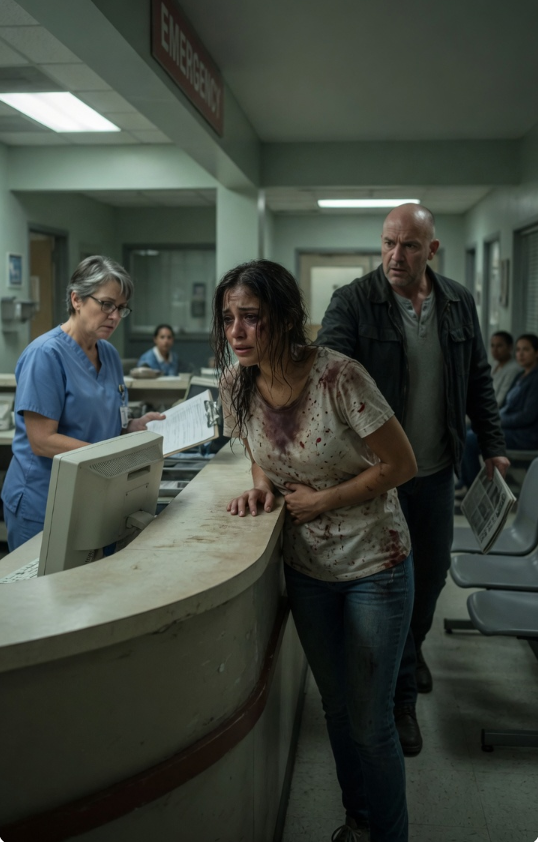
The morning after Patricia Doyle’s suspension, St. Catherine’s Hospital felt different.
Not quieter.
Tense.
Like a building holding its breath.
Employees whispered in hallways.
Doctors stopped conversations when administrators walked by.
Nurses checked charts twice before signing them.
And above all of it hung a question nobody wanted to ask aloud:
How many other patients had been ignored?
Dr. Samuel Whitmore stood at the end of a long conference table overlooking the city.
Rain streaked against the windows.
The hospital board sat across from him.
Some looked nervous.
Others looked angry.
One looked terrified.
The hospital’s Chief Operations Officer, Richard Kline.
A man who had spent years convincing everyone that efficiency mattered more than compassion.
A man who had quietly implemented policies designed to reduce costs.
A man who had personally approved Patricia Doyle’s repeated requests to deny treatment until paperwork was completed.
Whitmore placed a thick folder on the table.
The sound echoed through the room.
Nobody spoke.
Then he opened it.
“Over the last eighteen months,” Whitmore said calmly, “twenty-three emergency patients experienced delayed treatment because administrative verification was prioritized over medical assessment.”
Several board members shifted uncomfortably.
Whitmore continued.
“Six required emergency surgery.”
He turned a page.
“Three suffered permanent complications.”
Another page.
“One died.”
Silence.
Cold.
Heavy.
The kind of silence that changes careers.
Richard Kline cleared his throat.
“Samuel, those numbers require context.”
Whitmore looked at him.
“No.”
The single word landed like a hammer.
Kline swallowed.
“We were trying to reduce fraudulent admissions.”
Whitmore's eyes hardened.
“And how much money did that save?”
No answer.
Whitmore slid another document across the table.
“Because according to these records, your policy saved approximately one hundred and twelve thousand dollars.”
He paused.
“While exposing the hospital to forty-three million dollars in liability.”
One board member nearly choked.
Another removed his glasses.
Kline’s face went pale.
“Where did you get those figures?”
Whitmore leaned forward.
“From your own emails.”
The room exploded.
“What emails?”
“You accessed company correspondence?”
“Richard, what is he talking about?”
Kline stood abruptly.
“This is inappropriate.”
Whitmore raised a hand.
Immediately, the projector behind him activated.
An email appeared on the screen.
From:
Richard Kline
Subject:
Reduce ER intake costs
The message was short.
Brutal.
Delay non-verified patients whenever possible. Most leave before treatment. This reduces uncompensated care significantly.
Gasps filled the room.
Another email appeared.
Then another.
Then another.
Each worse than the last.
One referred to uninsured patients as "financial leakage."
Another discussed reducing trauma activations because they were "expensive."
A third specifically mentioned delaying treatment until insurance verification whenever possible.
Nobody defended him anymore.
Not even his allies.
Whitmore closed the laptop.
“Twenty years ago my wife died because someone treated her like paperwork.”
His voice remained calm.
But everyone could hear the rage beneath it.
“I built this hospital so that would never happen again.”
He looked directly at Kline.
“You turned it into the thing I created it to fight.”
Security escorted Richard Kline out before lunch.
By evening, news channels were already reporting the scandal.
Meanwhile, Anna Reed sat in a physical therapy room learning how to walk without pain.
Her stitches pulled with every movement.
But she was alive.
And for the first time in weeks, she felt safe.
Until the detective arrived.
Detective Laura Jensen closed the door behind her.
Her expression was serious.
Too serious.
Anna immediately noticed.
“What happened?”
Jensen sat down.
“The man who attacked you.”
Anna’s stomach tightened.
“What about him?”
The detective hesitated.
“He's talking.”
Anna felt cold.
“What did he say?”
Jensen opened a file.
“He admitted attacking you.”
Relief briefly flashed through Anna.
Then Jensen continued.
“But he claims someone paid him.”
The room seemed to shrink.
“What?”
The detective nodded.
“He says he was hired.”
Anna stared.
“No.”
“He provided bank records.”
The detective slid photographs across the table.
Wire transfers.
Cash withdrawals.
Anonymous deposits.
Large amounts.
Too large.
Anna looked up.
“Who?”
Jensen's face darkened.
“We don’t know yet.”
She pointed at one transfer.
“But whoever arranged it spent fifty thousand dollars trying to make sure you never reached this hospital.”
Anna’s heart stopped.
“Why?”
Jensen looked uncomfortable.
“That’s the question.”
She opened another folder.
Inside were photographs.
Not of the attacker.
Not of crime scenes.
Of Anna.
Photos taken months earlier.
At work.
At restaurants.
At her apartment.
At the grocery store.
Anna felt sick.
“Someone was following me.”
Jensen nodded.
“For a long time.”
The detective flipped to the final image.
And suddenly Anna forgot how to breathe.
Because standing in the background of one photograph...
Was someone she recognized.
Someone she trusted.
Someone who had visited her hospital room.
Someone who had hugged her after surgery.
Someone who claimed to care about her recovery.
Anna’s voice became a whisper.
“No...”
Detective Jensen looked at her carefully.
“You know this person?”
Anna’s hands began shaking.
The photograph slipped from her fingers.
And for the first time since the attack...
May you like


She realized the danger was not over.
Because the person responsible had been standing beside her all along.


